Are AI Indicators Possible on TradingView?
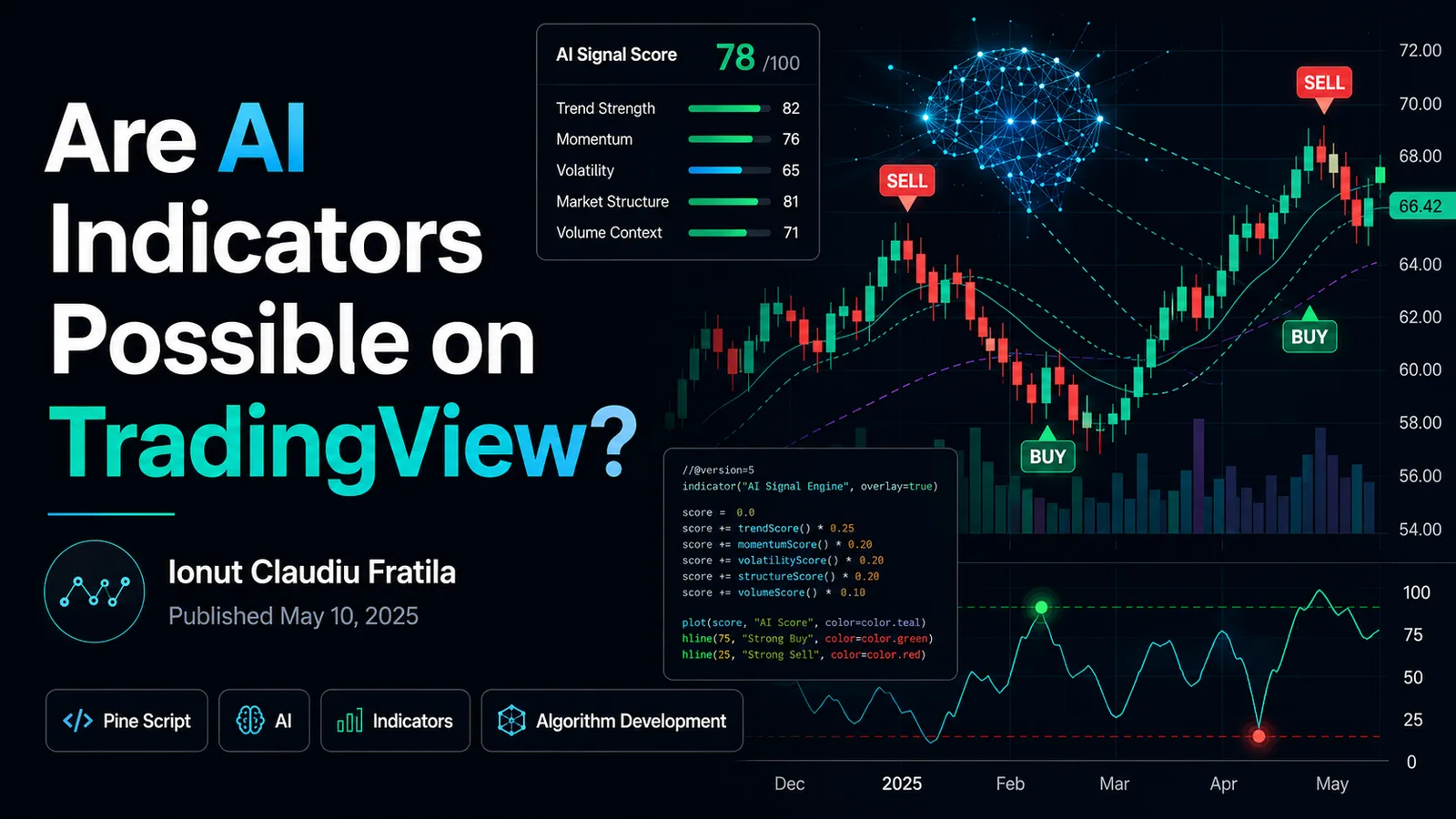
AI indicators have become common on TradingView. You can find scripts using terms like machine learning, predictive signals, adaptive logic, neural networks, smart money AI, or intelligent market detection. Some of these tools are serious attempts to use algorithmic ideas. Others are normal indicators powered by marketing instead of AI.
The Problem With TradingView
When traders see “AI indicator”, they may imagine a model running behind the chart, analysing thousands of candles, sending data to an external server, and returning a live prediction. That is not how Pine Script works.
TradingView indicators run inside Pine Script, and Pine has clear technical limits. It is built for chart calculations, indicators, alerts, and strategies. It is not a machine-learning environment. TradingView’s own documentation notes limits around execution time, memory usage, script size, and requested data, because scripts run inside TradingView’s infrastructure and need to remain responsive.
So the short answer is that AI indicators are possible on TradingView, but only if “AI” means algorithmic intelligence rather than running an AI model that trains on data and generates predictions.
What TradingView and Pine Script Cannot Do
Pine Script cannot behave like Python. It cannot train a large model, run a deep neural network, or freely call external APIs from inside the script. Pine does have its own request.*() functions, but these are for TradingView-supported data sources such as other symbols, timeframes, financial data, economic data, and limited maintained datasets. They are not the same as arbitrary HTTP requests to an AI server.
Webhooks are another area people often misunderstand. TradingView can send an HTTP POST request when an alert triggers. That is useful for external automation, but it is not a two-way connection. Pine Script does not acknowledge or process a response from that webhook, at least not as of 2026.
This matters because some claims around “AI-powered TradingView indicators” can sound more advanced than they really are. If the claim is that a Pine indicator is directly talking to an external AI model and plotting the answer back on the chart in real time, that is most definitely a lie.
What AI Can Realistically Mean on TradingView
A more realistic AI-style TradingView indicator is built from algorithms that can run directly in Pine Script. That may not sound as exciting as “deep learning”, but in trading it can still be useful.
For example, an indicator can compare the current market condition with similar historical periods. It might look at recent momentum, volatility, candle structure, percentage movement, or trend strength, then search for past moments that behaved in a similar way. From there, it can measure what happened afterwards and use that information to score the current setup.
It is not using an AI model. It just follows a machine-learning concept: compare the present with similar examples from the past and estimate what usually followed.
Another possible approach is adaptive selection. Instead of using one fixed parameter set, a script can track which settings or signal types have been performing better recently. Over time, it can give more weight to the stronger options and less weight to weaker ones. This is similar to multi-armed bandit logic, where the system keeps testing alternatives while gradually favouring what works best.
This kind of intelligence fits Pine Script well because it is lightweight, explainable, and calculated directly on the chart.
TradingView On-Chart AI vs Real AI
There are two distinct paths.
The first is on-chart AI-style logic. Pine Script handles the full calculation. The indicator uses pattern matching, adaptive rules, normalised features, filters, and scoring systems. Everything happens inside TradingView, so the result is easy to plot, share, and backtest visually.
The second is real AI. This is possible by sending alerts from TradingView to another system, where the heavy work happens outside the chart. Both approaches are valid, but they should not be confused. If the AI runs outside TradingView, then TradingView is acting as the signal source or alert layer. If the intelligence runs inside Pine Script, it has to be built from lighter algorithms that respect the platform’s limits.
AI Concepts Implemented Natively in Pine
Multi-Armed Bandits and Adaptive Selection
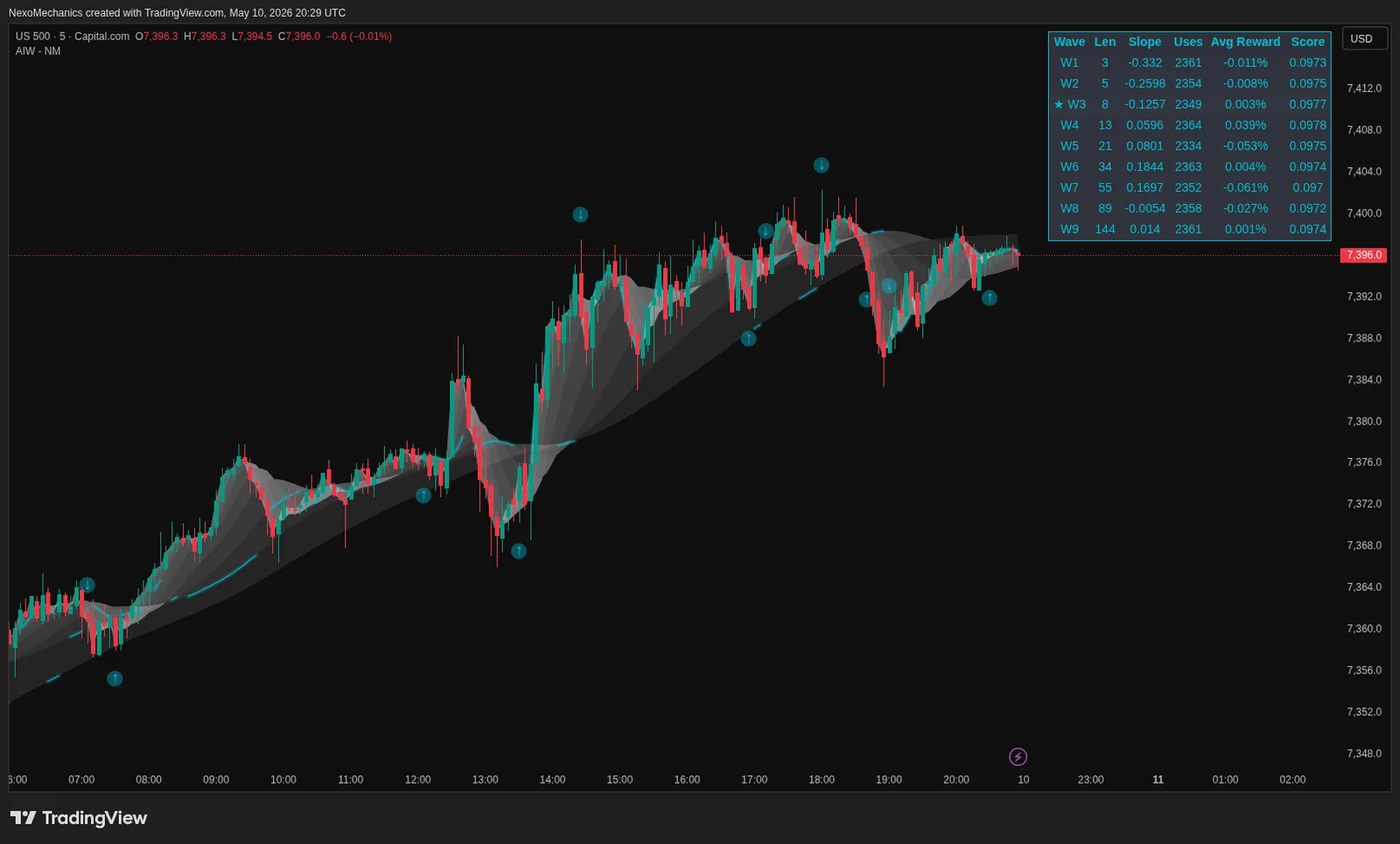
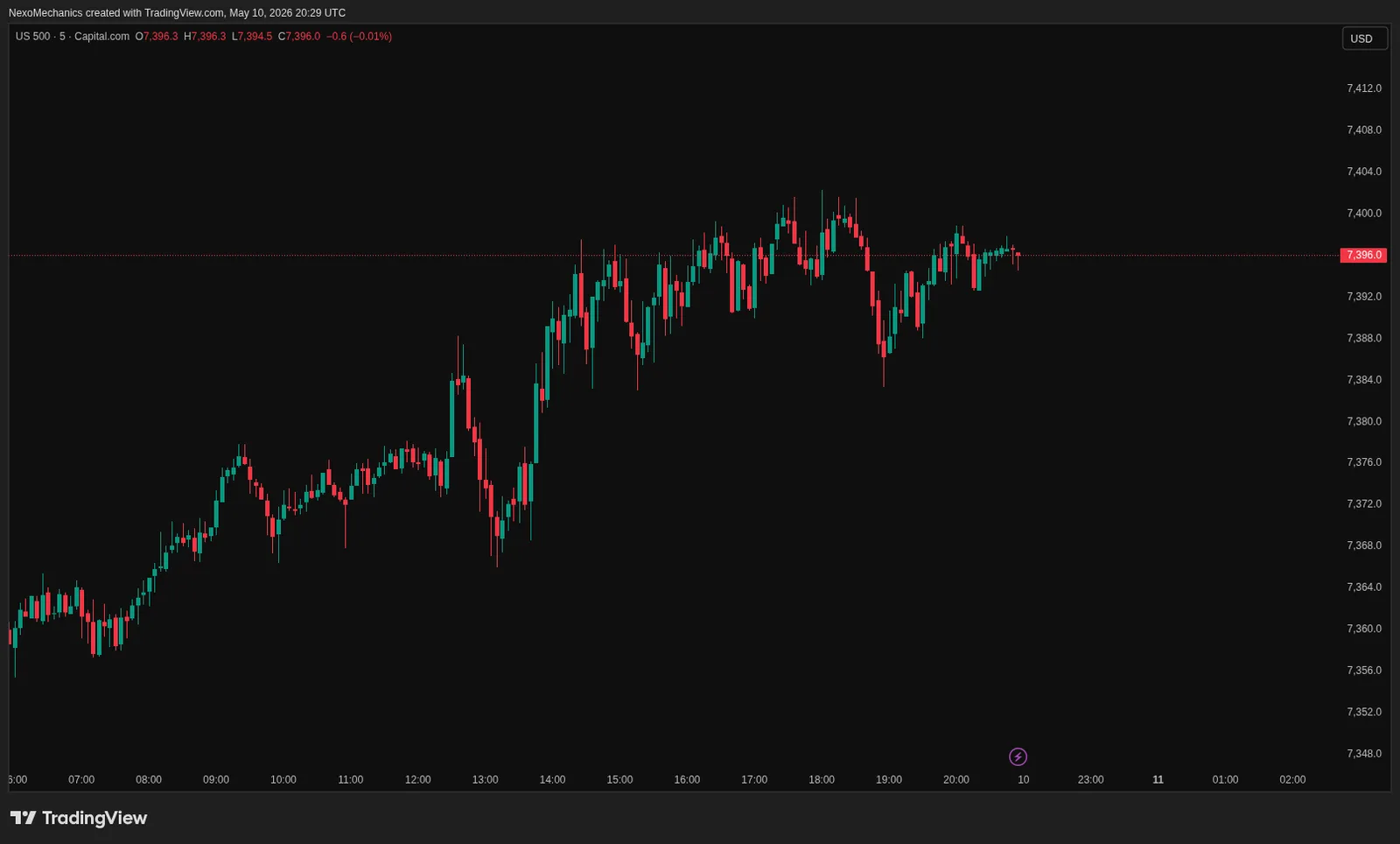
One powerful AI concept that maps well to Pine Script is the multi-armed bandit. In a bandit setting, you have several “arms” (choices) and you want to balance exploration (trying different options) and exploitation (focusing on what works best).
A practical implementation:
- Compute an Upper Confidence Bound score for each arm, where the bonus shrinks as an arm is pulled more often
- Select the arm with the highest score
- Observe the outcome and update the EMA reward
This is online, incremental learning. There is no batch training step, just continual reward updates as new data arrives. It gives AI-like behaviour because it adapts which configurations or patterns the indicator favours, while staying within Pine Script’s execution limits.
ANN-Style Pattern Similarity Search
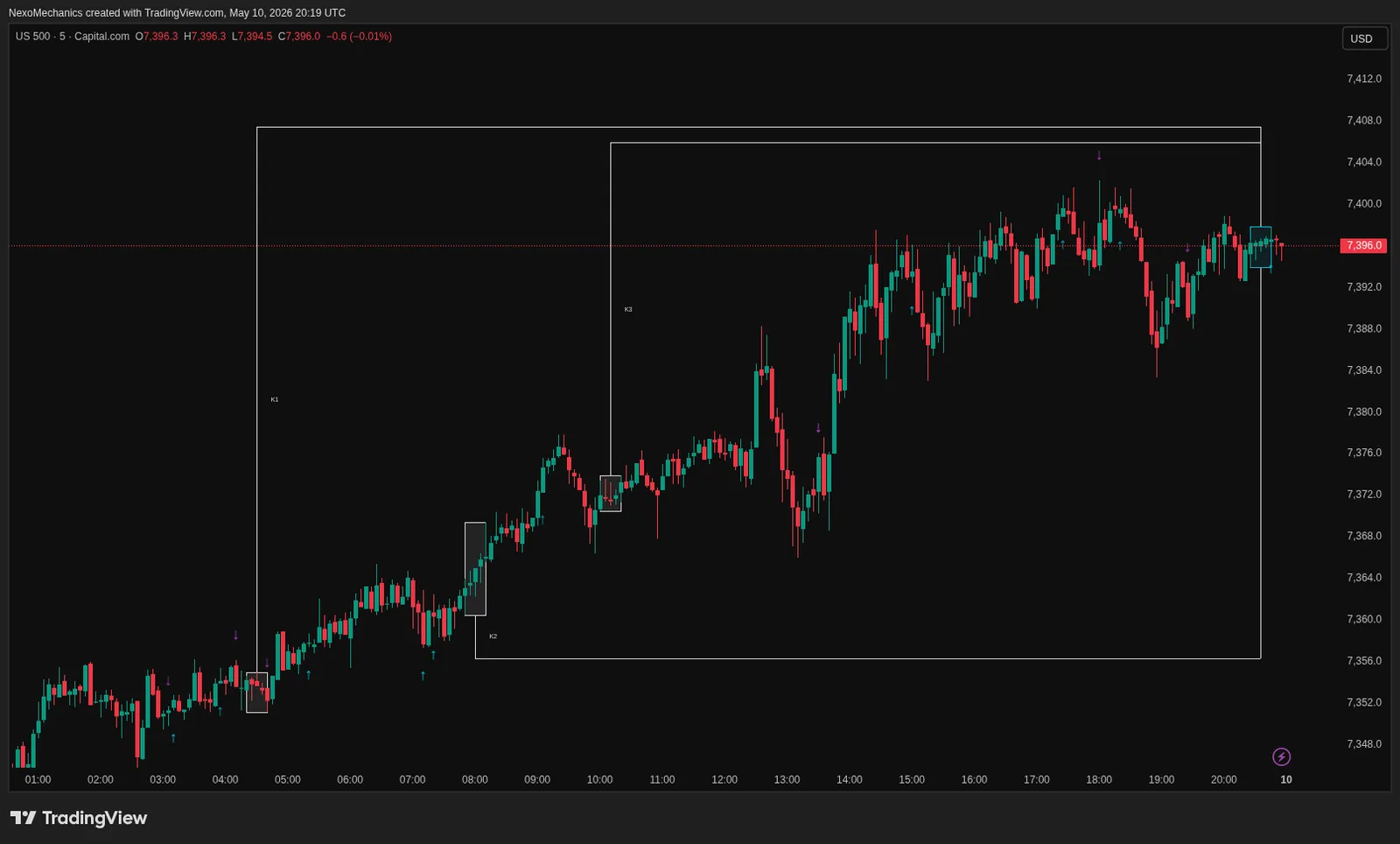
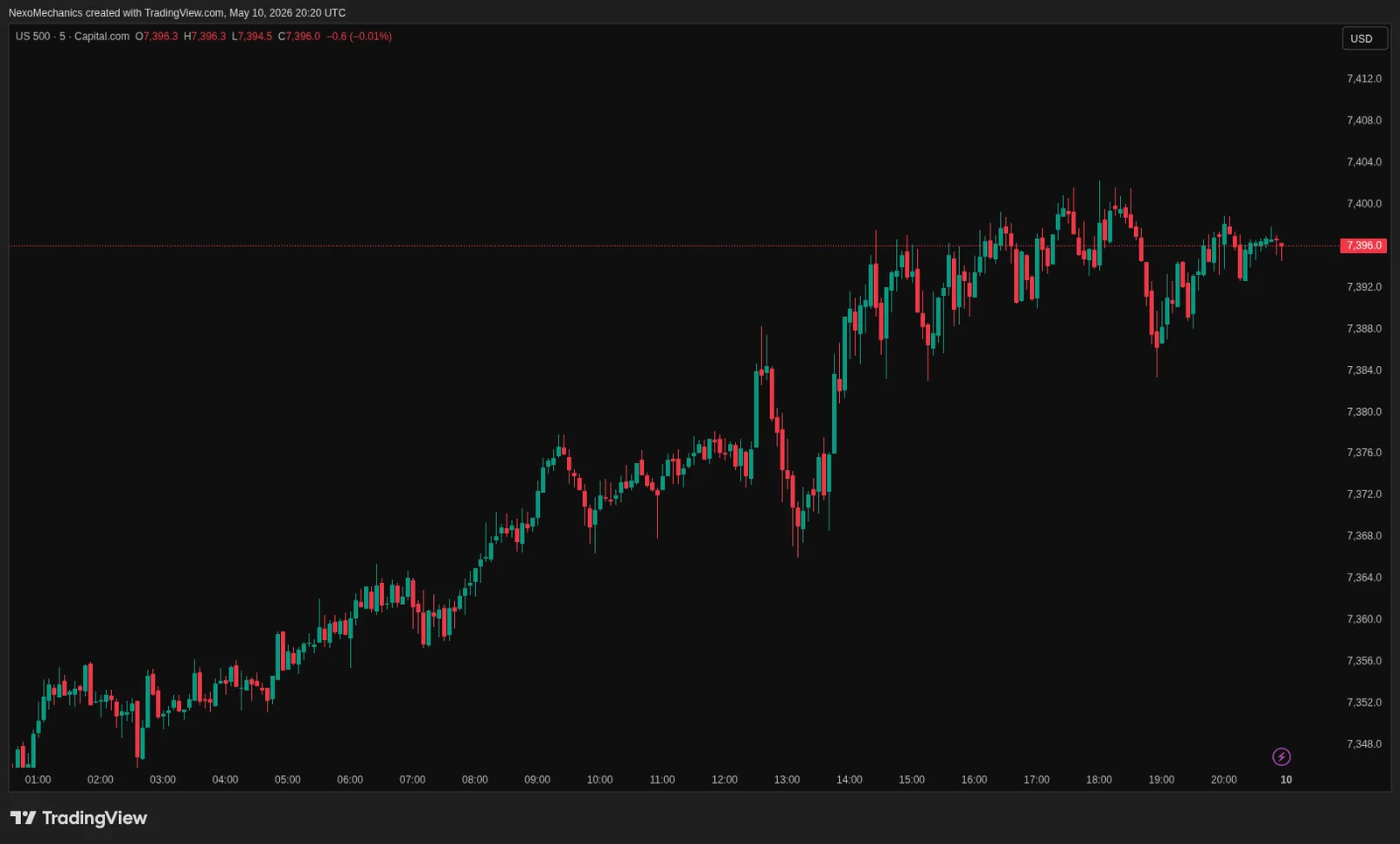
Another AI concept that fits well into Pine Script is pattern similarity search, inspired by approximate nearest-neighbour methods.
A typical pattern search algorithm in Pine Script:
- Builds a query vector from recent behaviour of a feature, such as log returns
- Slides a window over historical data, turning each candidate segment into a vector
- Computes an L2-style distance between the query vector and each candidate
- Maintains a top-K structure that keeps the K closest matches sorted by distance
- For each of those top-K matches, measures what happened afterwards over a fixed horizon
- Accumulates statistics: average move, standard deviation, z-scores, p-values, and confidence
The result is an indicator that essentially says: when the market looked like this in the past, here is what typically happened next. Conceptually this is similar to the ANN and classification logic found in ML-flavoured Pine libraries.
Why This Matters for Traders and Developers
For traders, understanding these distinctions prevents disappointment. The word “AI” does not prove anything. A serious AI-style indicator should still make sense after the marketing language is removed.
For developers, the opportunity is to bridge AI thinking with Pine Script’s constraints. This means designing systems that implement meaningful AI concepts within Pine Script’s sandbox, or combining Pine Script with off-platform infrastructure for heavier computation.
It is entirely fair to say that AI indicators are possible on TradingView, as long as AI is understood as a set of algorithms and concepts that can be expressed in Pine Script, rather than as a model that trains and infers in real time.